kolorádó
fesztivál
A custom-built festival platform enabling real-time updates and efficient team workflows.
A complete redesign and rebuild — replacing a legacy WordPress system with a structured, scalable platform that gives the team full control over a fast-changing programme.
project objectives
The brief revealed a set of operational challenges that directly shaped the project.
Fast editing
Festival content changes constantly in the weeks leading up to the event. Updates needed to be immediate — without delays or technical barriers.
Independence
The previous system required developer involvement for even minor updates. The new platform had to give full control to the internal team.
Collaboration
Multiple people work on the programme simultaneously — across different roles. The system needed to support parallel editing without conflicts.
Custom design
Kolorádó has a strong and evolving visual identity. The website needed to reflect that — without relying on templates or generic solutions.
The previous website had been running on WordPress for over five years. Over time, it became increasingly difficult to maintain and adapt. Editing content was slow and often frustrating. The structure was rigid, making even simple updates time-consuming — especially under the pressure of pre-festival deadlines. Performance limitations and accumulated technical debt further reduced flexibility.
On top of that, reliance on an external development team created a bottleneck. Response times were slow, and the system could not keep up with the pace required by the festival's operations.
Structure first.
Design second.
Rather than iterating on the existing system, the project started from a clean slate. The focus shifted early to content structure and workflows, before any visual design decisions were made. The goal was to build a system that reflects how festival data actually behaves — and how the team interacts with it daily.
Content was broken down into distinct types — artists, events, and locations — with defined relationships between them. These connections allow information to flow automatically across the site, eliminating duplication and manual synchronization. At the same time, equal emphasis was placed on the administrative experience. The backend was treated as a product in itself — designed for clarity, speed, and ease of use.
Sample animation from
the full-screen experience.
One of Kolorádó's most distinctive features is its animated opening sequence — a full-screen display of layered botanical illustrations that sets the mood before the festival content loads. Built entirely in CSS and vanilla JavaScript, the animation runs smoothly across all devices without relying on any external libraries.
The plants below are the actual assets from the live site, rendered using the same animation system.
Every programme,
always in view.
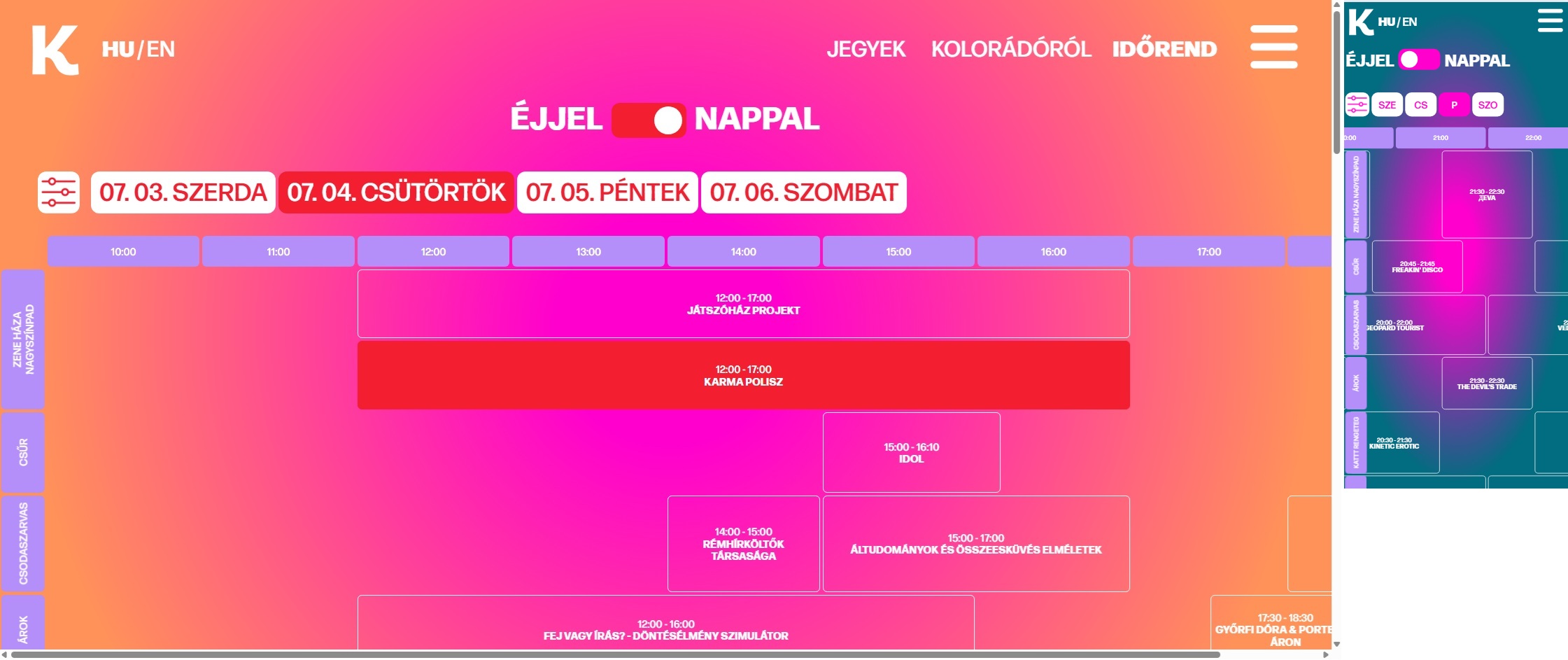
The timetable page is the operational heart of the festival experience. It presents the full programme as a scrollable grid — navigable both horizontally across time slots and vertically across stages. Visitors can filter by day or location to narrow down what matters to them, and tap any event to open a detailed pop-up with artist information, set time, and stage details.
Behind the scenes, the timetable is driven entirely by the structured content model — no manual layout, no hardcoded entries. Every change made in the CMS is reflected instantly across the grid.
built from scratch
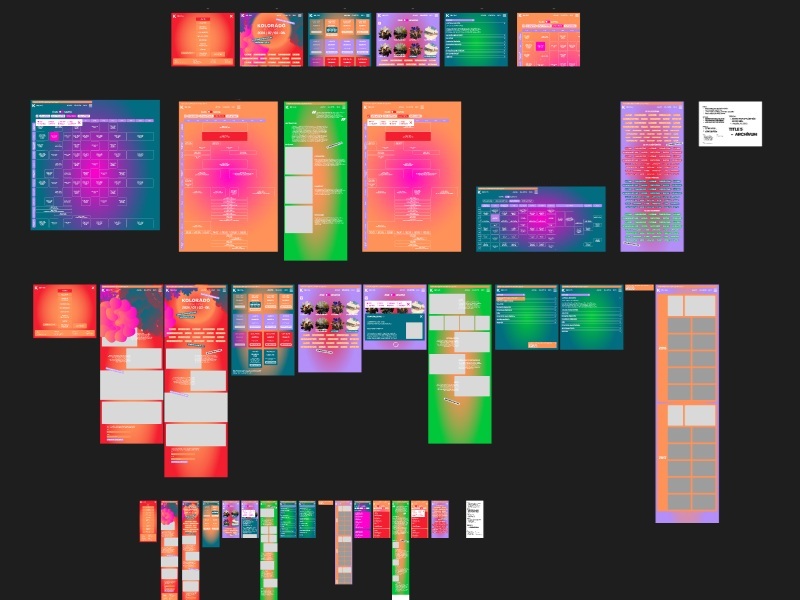
The interface was built entirely from scratch, tailored to Kolorádó's identity. A modular design system was developed in Figma, allowing for consistency across pages while staying flexible enough to handle complex programme content.
Layouts were designed to present dense information clearly, without overwhelming the user. The design process remained collaborative throughout, with continuous feedback and iteration inside a shared environment.
The result is a responsive interface that balances visual character with usability — across all devices.
drupal & custom frontend
The platform was implemented with a custom frontend and a Drupal-based CMS. All content is fully editable — no hardcoded elements — giving the team complete control over the site.
The structured content model ensures that artists, events, and locations are interconnected and dynamically updated across pages. Performance was a key consideration from the start. The frontend is lightweight and optimized to ensure fast load times, even with content-heavy pages.
one source of data
At the core of the system is a structured content model built around relationships. All text content, images and embed media references, dates, content references were edited in a dedicated easy-to-use spreadsheet environment by multiple team members.
Artists
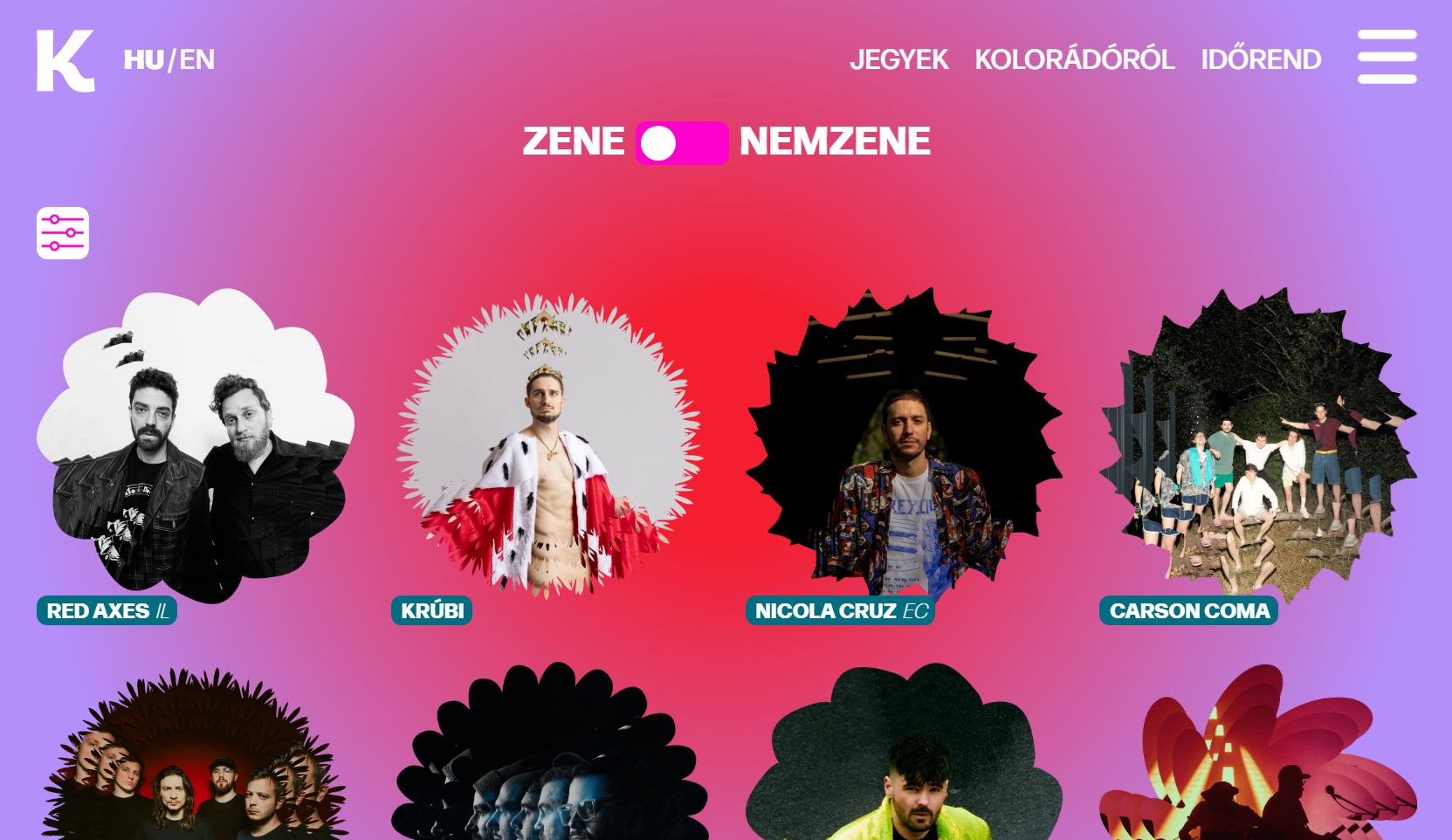
Exist as standalone entities with their own data. An artist automatically appears on all relevant event pages — no manual linking or duplication.
Events
Pull in their associated location and info dynamically. Changes to an artist or location propagate instantly across all connected events.
Locations
The calendar view shows all scheduled programmes automatically. Each location always reflects the current, up-to-date programme without any manual maintenance. All artist info is accessible in a pop-up from the calendar too.
Designed for the people who actually use it.
Parallel editing, no conflicts
Multiple team members can work simultaneously, each within their own area of responsibility — whether programme coordination, communication, or logistics. The need for developer involvement in day-to-day operations is almost entirely eliminated.
Familiar tools, less friction
The workflow combines structured CMS editing with spreadsheet-based data handling, extending tools the team already uses. This reduces the learning curve while maintaining control and consistency.
What this project reinforced.
Backend as product
Designing the administrative experience is just as important as designing the frontend.
Structure defines scale
Well-structured content models define not only the current project, but its long-term scalability.
Familiar tools win
When integrated properly, familiar tools can outperform more complex systems — and reduce the learning curve significantly.
have an idea?
let's make it work.
Send us a message and we'll get back to you quickly.